|
FRESH
YARN PRESENTS:
Turning
Japanese
By Andy Corren
We
were Jews. We were southerners. We were white trash and poor.
We
lived in Japan.
The
Corren family beached the island of Okinawa in the summer of 1970.
We were stranded there by my father, Sergeant Major Sherman Bernard
Corren, who was on a mission to train soldiers to skirmish in Vietnam.
None of us knew what skirmishing was, but we knew you did it along
the line of control. And while we didn't exactly know what
a "line of control" was either, we didn't ask. You didn't
ask the Sergeant Major questions. You just smiled when he
addressed you, packed your bags when he told you to, and moved to
a muggy island somewhere in Japan. My father was a phantom, an absentee
landlord who genuinely frightened people. And by "people"
I mean us. Daddy was a real, live soldier, a trained 82nd
Airborne killing machine who could coolly cut a throat or methodically
caponize a chicken in the field. Fortunately, due to all this skirmishing
and killing, we never saw much of each other, and we never had to
fake a close relationship. I was a child-size piece of Jewish furniture,
boxed and shipped from one end of the earth to the other, looking
for love from a man who didn't know what it was, couldn't show it
and never gave it. A direct consequence of this Jewish-Japanese
dilemma is that I have spent the past 30 years climbing in and out
of bed with unavailable Asian men who have strong, violent hands.
But that's really another story.
Japan
in 1974 was exactly like the Japan of 2004 -- Japanese. Very,
very Japanese. Exotic, hot, colorful, hot, and, well
hot. I
remember the heat. And the food. And the bugs. But mainly
the heat. I'm told I was a healthy, curious five-year-old homosexual,
more curious than most, and was eager to consume everything
about Japanese culture. So I went native. Bamboo bed, flip flops,
kimonos and salad bowl haircut. My first spoken language was Japanese.
I preferred eating with chopsticks, and the very first meal I can
remember is stir-fry. Sunsets were glorious and golden, setting
over our crappy yellow and white military house, right there in
the Land of the Rising Sun. I felt I was clearly marked out as special!
I had been whisked away by powerful Shinto Gods, plucked from the
tobacco fields and hog farms of eastern North Carolina, granted
a dazzling Oriental life! I was unique! I was no longer American,
I was Asian American! Nothing on earth could make this better!
Nothing!
Except
hired help.
I only
inherited two things from my parents: the first was my simmering
Jewish anxiety -- which I like to call my "inner Pandora,"
and the other was my ridiculous sense of entitlement, which I like
to call "inexplicably unearned." Let me say again, we
were poor. We never, ever, ever had money. We drove used, used
cars. I wore my older brothers' older bothers' clothes, rode
fifth-hand bikes and happily ate mustard-and-lettuce sandwiches
for lunch. Half the time our electricity was disconnected and running
water a luxury. If you've never "diverted" water from
your next-door neighbor's outside faucet, never showered using a
garden hose, you can't understand the thrill I still get every time
I turn on a faucet and something other than spiders and brown mud
spews out. When we moved to Japan, a raging inner Vanderbilt suddenly
sprang out of Mom, and took us all by surprise. Mom, who was raised
simply, by simple Hungarian Jews who lived simply. No, not in Budapest,
but in Miami. Her people were simple, gassy, Hungarian people. Yet
somehow, with her family comfortably settled into Army base life,
her husband away slaughtering peasants, her bowling game well above
average, my Mom suddenly became
Hungarian Royalty. In a single
phone call, she yanked the Corren family, all four of my brothers,
my sister and me, all the way from Hebrew white trash to Japanese
Landed Gentry. Mom hired a maid. Two maids. Twin sisters.
Meet
Renay Corren. Otherwise known as "Rosie," "Rose,"
"Ray," or "the lady with all those kids." She's
the military wife you used to know? From 1956 to 1969? The one who
always looked pregnant or always looked stoned, or always was both.
She's the one who, if there were twin Japanese sisters at Kadena
Base, Okinawa, willing to work as maids to a gigantic Jewish family
from North Carolina, could hunt them down, hire them and grossly
underpay them. Hi, Mom!
For
a tiny Hebrew moppet such as myself, brimming with latent homosexuality
and plantation master tendencies, the sisters Sayoko and Kyoko were
the greatest playthings ever. They were like human pets,
life-size China dolls -- a hateful stereotype, but they really looked
like dolls! -- all subservient and pleasant, eager to please good-time
girls. The sisters could do everything from weaving a kite out of
rice paper to reaching the American cereal atop the refrigerator.
I loved them instantly and unconditionally. They taught me how to
say "shit" in Japanese (it's kuso!) They groomed
my unruly hair with fishy-smelling oil. They told me, in their broken
English, and with their every small, perfect gesture, that they
preferred me over the four other thick-necked, slack-jawed dick-headed
Corren brothers.
When
Sayoko and Kyoko came into our lives, that Rising Sun illuminated
our modest home, filled it with a golden glow of contentment, prosperity
and harmony. All was well at last with the Corren Family.
For
about three months.
The
Sergeant Major was back. And it was the week before Halloween, which
fell that year on a weekend. It was Friday. Soon Sayoko and Kyoko
would be leaving for the long, dusty walk back to their village.
For their day off. Away from us. Away from all but one of these
strange-talking, quarrelsome Jewish people. For on Saturdays, one
of the Five Magnificent Corren Brothers got to go home with them.
It was a coveted prize among the squabbling Corren kids of Okinawa.
How I came to hate Saturdays. With all those brothers competing
for the privilege to escort the twins home, you can imagine how
often I got to go. Once a month. One fucking time. When the sisters
strolled away from our house without me, down that filthy yellow
clay road to a village called Futenma, I was
devastated. Abandoned.
Torn apart by heartbreak and violent outrage. How could any of my
vulgar, chromosomal-challenged brothers understand the graceful
beauty of the twins' lilting walk, or the kindness that exuded from
the pores of those sweet, simple sisters? How could they understand
the joy I found in the companionship of Sayoko's son, Taki? Taki,
who introduced me to two lifelong passions: Handsome Japanese television
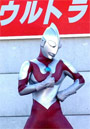
superhero Ultraman, and eating raw beef hot dogs dipped in soy sauce.
continued...
PAGE 1 2
-friendly
version for easy reading |
| ©All
material is copyrighted and cannot be reproduced without permission |
|